
YOU
MADE IT!
We’ve developed these
activities just for you!
We're happy to assist with leading your team through one or all of these activities. Contact us at hello@mariondesign.co if you'd like further assistance or have questions.
DEFINE SUCCESS
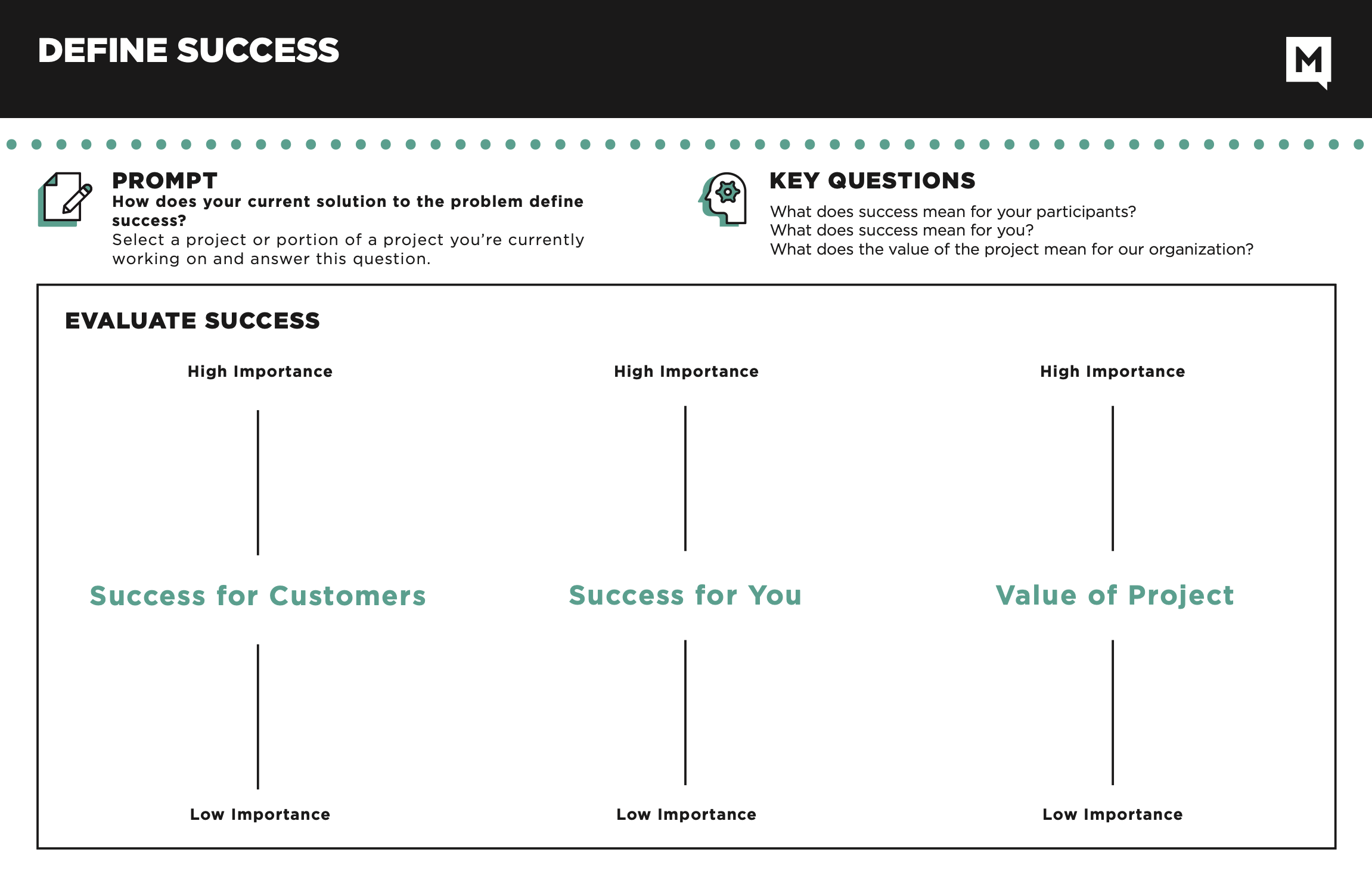
The The idea is to generate as many possibilities of how your team defines success. Then narrow them down to the most critical.
1. Ask questions to the team and have them write one answer on each post it note to fill the center areas of the poster.
a. What does success look like for the child, the parent, the family, the pastor, etc.? Focus on the primary customer of your project/service/product.
b. What does success mean for ______________(organization, project, initiative, etc.)?
c. What may be the value of the project for the organization?
2. Once as many elements have been posted, the team as a group or in pairs will move each post-it on the spectrum of importance to emerge which answers fall off the range of importance and which once emerge and most important.
3. The result should reveal which key items determine what success is for the people you’re serving with your project.
As the project progresses, it’s helpful to review the criteria for success periodically as internal and external factors may change.
NORTH STAR METRICS
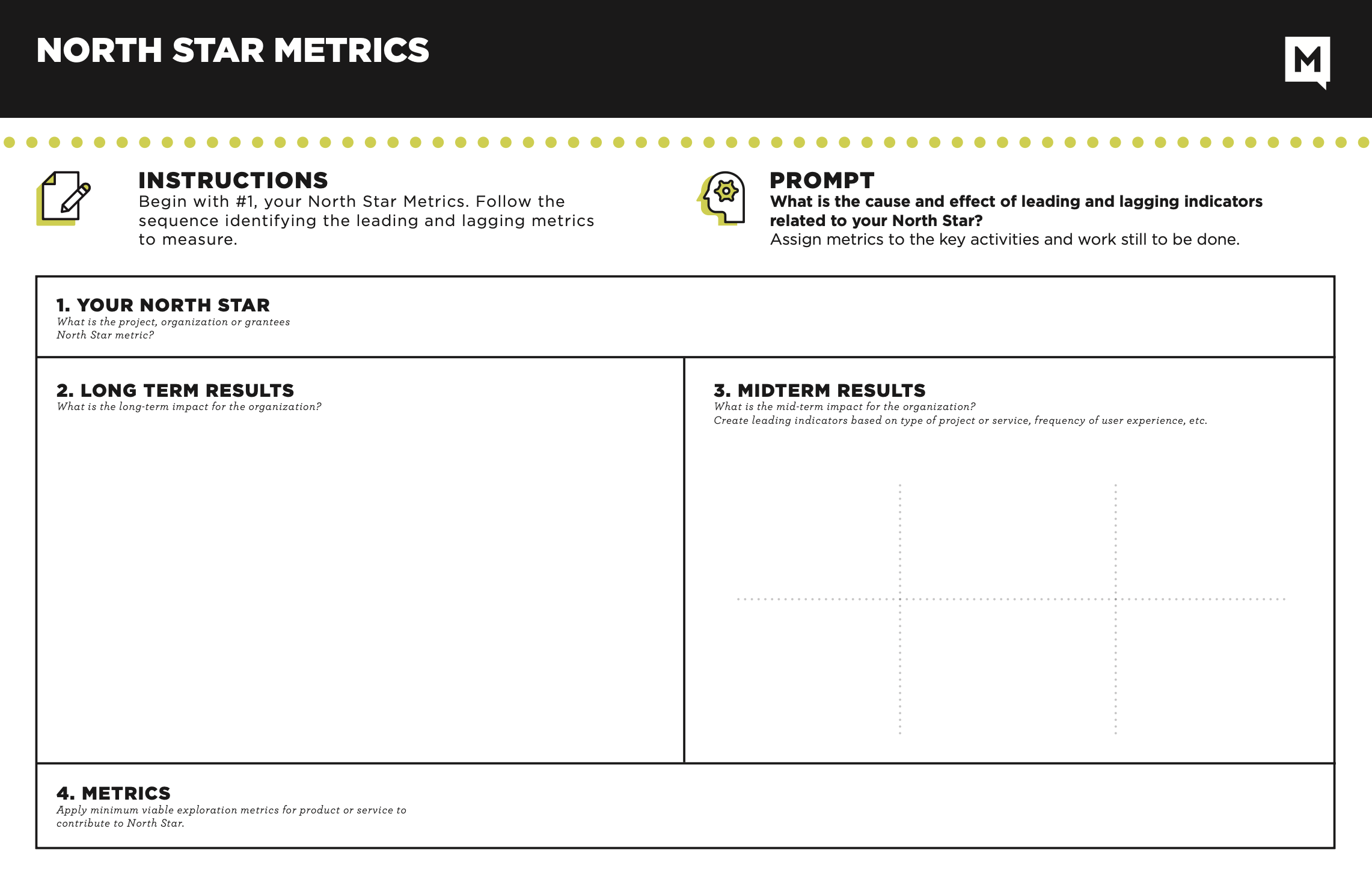
This template shows how today’s work connects to your biggest goal. Start at the top and work down.
1. Name your North Star. What is the one metric that defines success for your project, organization, or grantees?
2. Define long term results. What lasting impact will your organization see? This is your lagging indicator. It shows the effect over time.
3. Define midterm results. What impact should show up along the way? Think about how the user experience is changing. Map your inputs. Fill in up to six directly related input metrics. These are your leading indicators. Base them on the type of project or service and how often people experience it.
4. Assign metrics to the work to be done. List the key activities still ahead. Give each one a simple, minimum viable metric that shows how it moves you toward your North Star.
Trace the cause and effect. Read the sheet from bottom to top. Your activities drive your inputs. Your inputs drive midterm and long term results. Those results add up to your North Star. If a link feels weak, adjust your metrics.
MINIMUM VIABLE METRICS
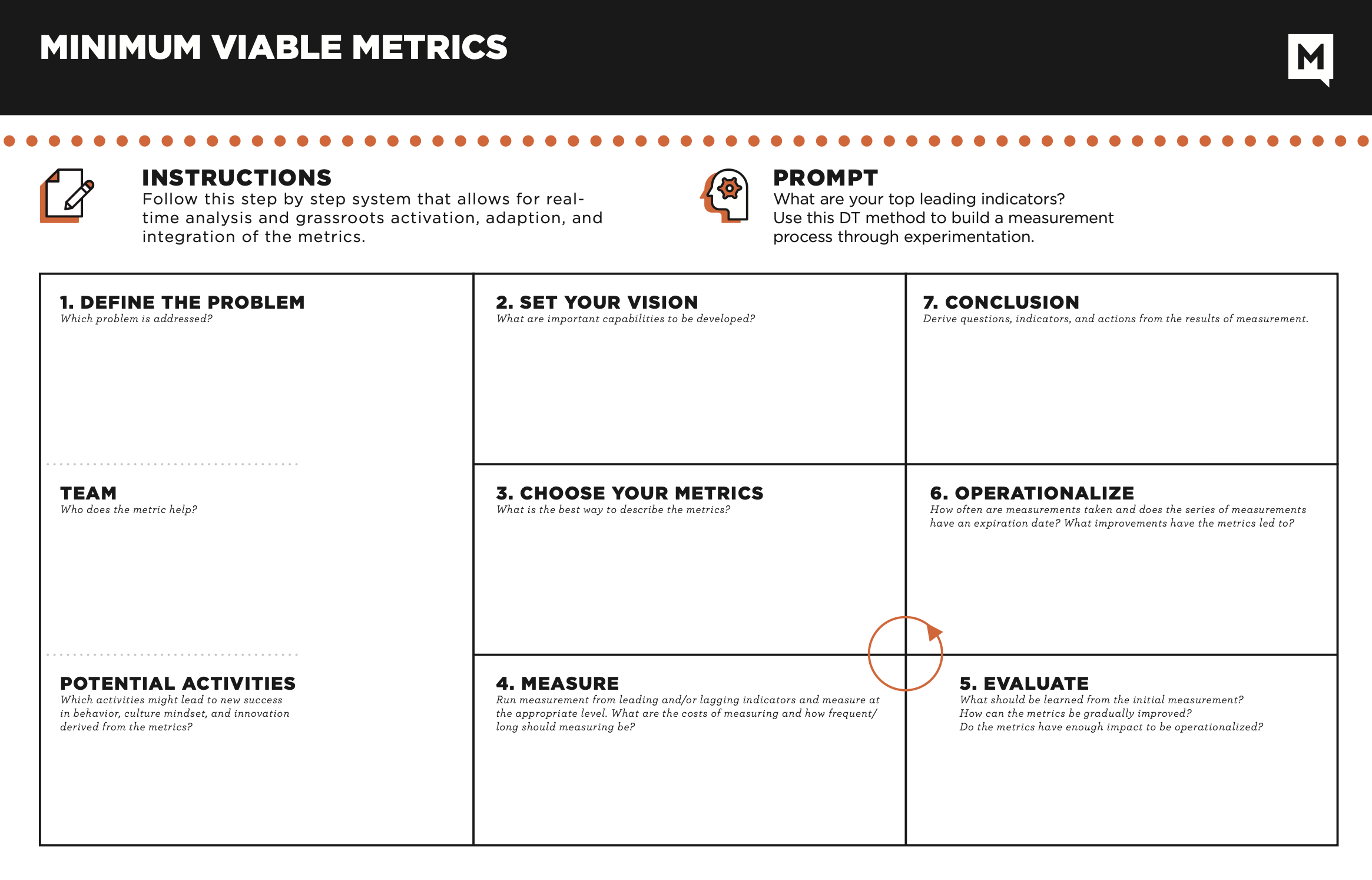
Write your top leading indicators in the top bar. Then work through the numbered steps.
1. Define the problem. Name the problem you’re tackling. Below it, note who the metric helps and which activities might spark new behavior, culture, or innovation.
2. Set your vision. What capabilities do you need to build to solve this problem?
3. Choose actionable metrics. Decide the clearest way to describe what you’ll measure.
4. Measure. Track your leading or lagging indicators at the right level. Note the cost, schedule, and how often you’ll measure.
5. Evaluate. What did the first round teach you? How can the metrics improve? Are they strong enough to keep using?
6. Operationalize. Set how often you’ll measure and when the series ends. Summarize the improvements the metrics have led to.
7. Draw conclusions. Turn your results into new questions, indicators, and next steps.
Keep the loop going. Steps 3 through 6 form a cycle. Refine your metrics, measure again, and evaluate until they’re worth building into your regular rhythm.
OKR: START HERE
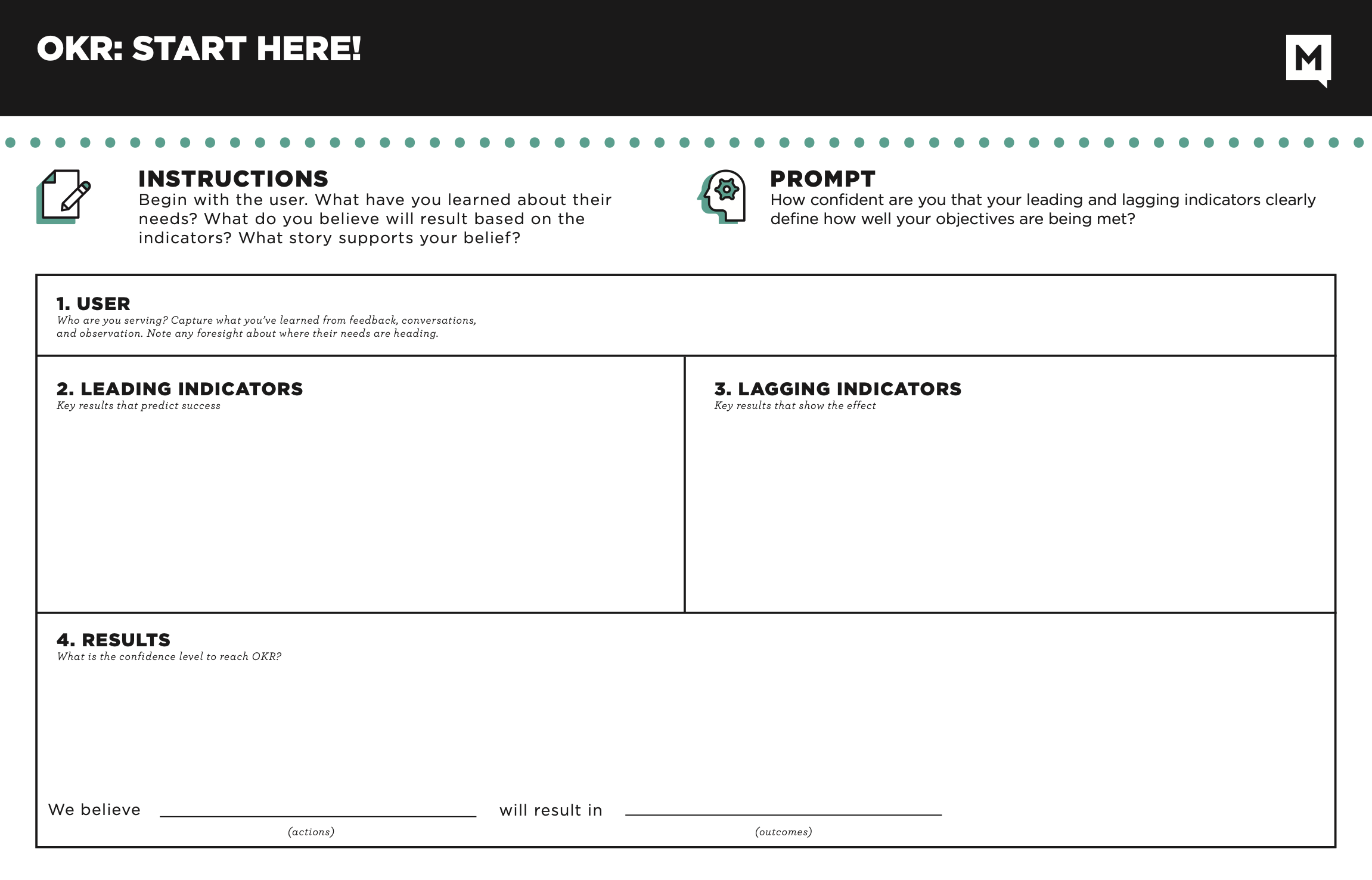
Start at the top. Write your objective and the key results you hope to see. Keep the objective simple and meaningful.
1. Describe your user. Who are you serving? Capture what you’ve learned from feedback, conversations, and observation. Note any foresight about where their needs are heading.
2. Name your leading indicators. These are early signals that predict success. Think of actions or behaviors you can see happening along the way.
3. Name your lagging indicator. This is the result that shows the effect after the fact. It tells you whether the objective was truly met.
4. Rate your confidence. How sure are you that you’ll reach this OKR? Be honest. A low score isn’t failure. It shows where you need more learning.
Finish with your belief statement. Fill in the blanks at the bottom: “We believe (actions) will result in (outcomes).” Then add the evidence, insights, and bets that support it. Check your work. Ask the prompt question: do your indicators clearly show how well your objective is being met? If not, revisit steps 2 and 3.
OKR DOCUMENTATION
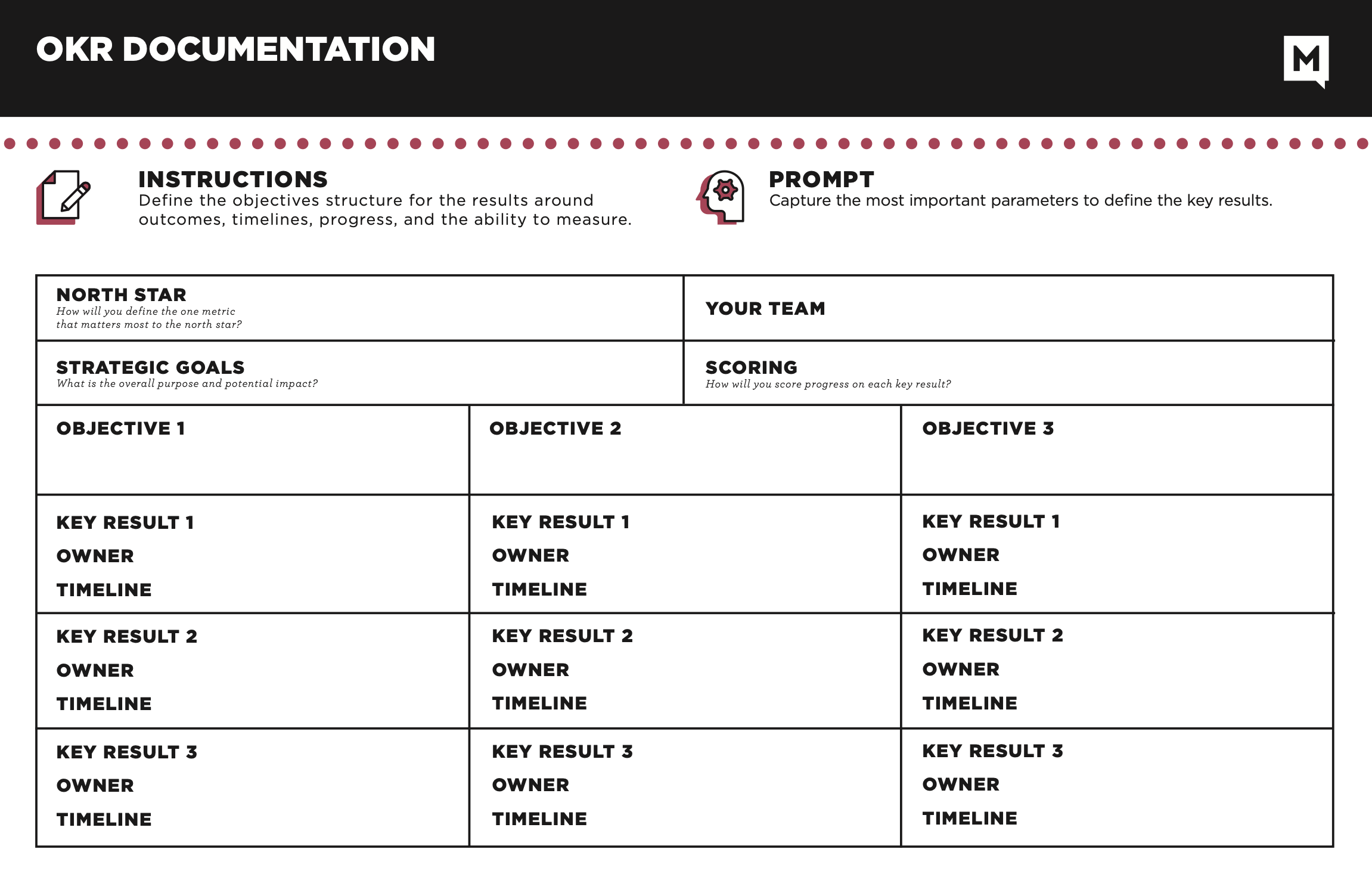
This template captures the details that make your key results clear and trackable. Fill it in from the top down.
1. Name your team. Write the team responsible for these OKRs.
2. State your strategic goals. What is your prioritized mission? Describe the overall purpose and the impact you hope to make.
3. Define your North Star. Name the one metric that matters most.
4. Set type and scoring. Decide how you’ll score progress and who the metrics serve.
5. Write up to three objectives. What does the team want to achieve? Keep each one clear and inspiring.
6. Add key results under each objective. List up to three per objective. Each should describe a measurable effect that shows the objective is being met.
7. Assign an owner. Give every key result one person who is responsible for it.
8. Set start and end dates. Add a timeline for each key result so progress can be tracked.
9. Review the whole sheet. Does every key result tie back to your North Star? If not, refine it.